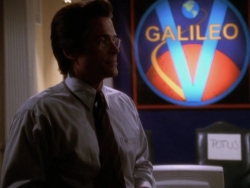
Sunday, April 24, 2016

S2e15-Ellie (Charlie, please don't say the word "erotic" in the Oval Office.)


There are things that, if you're watching the West Wing for the first time, you might not realize when a major theme is introduced.  In this episode, Toby introduces his best friend and partner in thought:


That's Toby, with his hands full of thoughts: The Pink Rubber Bouncy Ball.
(Follow Toby Ziegler's Ball on twitter HERE)

(The symbol of wisdom and truth.)

Think I'm making this up?  Think again, Pink Rubber Bouncy Ball denier!  There's hard bouncy science that backs this up, and this is hardly Aaron Sorkin's first time promoting this truth of sphere-based intelligence.

Behold- evidence:

("The American President")

("A Few Good Men")
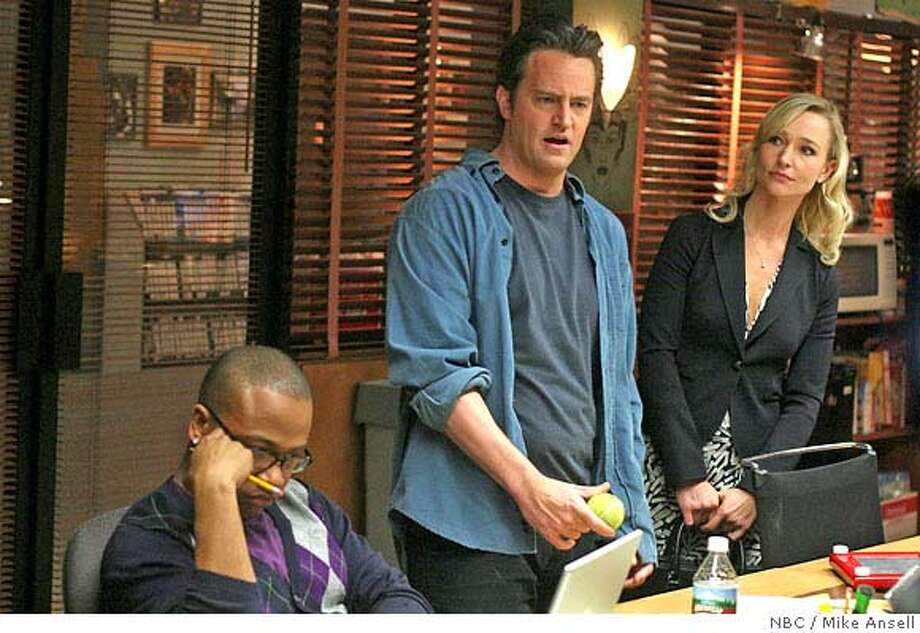
("Studio 60 on the Sunset Strip")

("Sports Night"-Josh Malina is in so much Aaron Sorkin, he's graduated to being able to just use an imaginary ball)

Sorkin isn't the only one.  Clearly, the opinion of scriptwriters is that genius is associated with spheres.
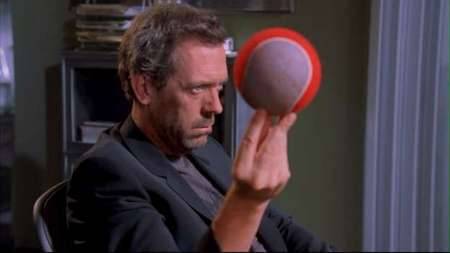
("House, M.D.")

(Sheldon from "The Big Bang Theory")

Aaaand, I just spent 30 minutes trying to find a picture of Doogie Howser throwing a ball while typing on his computer, to no avail.  Curse you Internet!

So, what's there to share from this episode besides Toby's new prop?  We meet our second Bartlet daughter- Ellie, and realize that she's the black sheep of the family.  What does that mean?  She goes to medical school at Johns Hopkins, isn't terribly involved in the politics of the Bartlet Presidency, and regularly allows her hair to fall over her face.  She also provides the groundwork for one of the most touching lines in the show.  After she told the President that she doesn't know how to make him happy like Zoey and Liz (the so-far-never-pictured Bartlet daughter), he responds by saying:

"The only thing you ever had to do to make me happy was come home at the end of the day."

As a 20-year old watching for the first time, I called my mom and dad.  As a 34 year old father of a one-year old, I cried.  Is this what life is like?  Increasingly unable to manage your emotions with anything sentimental?  It would seem so.  I teared up watching a life insurance commercial the other day, but I think that's only partly my fault, since the industry seems intent on guilting you into purchasing their product, and have hired the people who created the ASPCA ads that had Sarah McLachlan songs playing in the background.  Yeesh.

Also, there's some heavy statistics regarding the legalization of marijuana in this episode that do demonstrate some shifts in public opinion to today's political landscape, but I'd rather talk about Sorkin's connection between genius and spheres, because he's got science on his side.  There's quite a lot of research on the connection between hand-eye coordination and brain development, but this article  highlights my favorite bit of info: "the cerebellum also controls the vestibulo-ocular reflex (VOR) which is a reflex eye movement that stabilizes images during head movement by producing an eye movement in the direction opposite to head movement, which keeps the image in the center of your visual field." That's why you can read this while shaking your head in disbelief that I'm spending so much time on Toby and a pink bouncy ball.  Pretty cool, right?

Ok, stop shaking your head, I don't want you to get sick!

What's Next?  S2e16- Somebody's Going to Emergency, Somebody's Going to Jail

Like what you've read?  Click on those little buttons to share this blog via facebook, twitter, email, etc!

Saturday, April 23, 2016

S2e14- The War at Home (It's how you justified it to God.)

Abbey- "Do you get that you have M.S.? "

With this one question and the ensuing conversation with the President, it becomes clear that "The War at Home" isn't the kidnapped DEA agents, Congress or the press; rather, between the First Couple.  After Mrs. Bartlet tells Leo that the President has Multiple Sclerosis in Season 1, episode 12 ("He Shall, from Time to Time"), the fact of his illness is dropped from all plotlines and episode.  Then, nearly a full season later, we learn that the President, mindful of his illness, made a deal to only serve one term as President.  He would leave office before entering the time where more severe symptoms would be likely to emerge- and it was this deal that allowed him to justify not disclosing his illness to the electorate.  


While the idea of hiding information from the voting public is hardly new, the notion of hiding an illness is somewhat without precedent.   FDR is somewhat misrepresented in this light- it's clear that though the Secret Service restricted photos of FDR getting in and out of a car, being assisted or in other compromised positions by confiscating cameras and destroying film, there were plenty of mentions of the President's illness in the press (though it is now thought that he suffered from Guillian-Barre syndrome, not Polio).   Videos also taken show FDR using his wheelchair in front of servicemen and his method of walking (essentially pivoting) in public certainly exemplified some level of compromised health.


The much more complete deception in Presidential history belongs to Woodrow Wilson, who suffered a massive stroke in 1919 and was incapacitated for much of the final year and a half of his term.   During that time, his wife Edith managed the Executive Branch, deciding which information made it to the President, and was assisted in maintaining the secret by Wilson's doctor- all before passage of the 25th Amendment which clarified the process of succession in the event of death or incapacitation of the President.  

Would such a thing be possible in today's world?  If you have enough production assistants, and are the president of a fictional United States of America.  Initially, Sorkin just wanted the president to have an illness so he could get the funny scene of him watching daytime soaps- it turns out that he asked his staffers to find an illness that "did not put Mr. Bartlet in a wheelchair, could go undetected for years at a time, and that could be in remission and undetectable in checkups because there was no laboratory test for it" (from a NYTimes article here).  So, while receiving such a diagnosis and maintaining secrecy seem far-fetched in the information age/TMZ/Cellphone cameras everywhere world we live in, it is made possible in this fictional realm by thorough research and clever use of exposition by the creative forces behind the show.  

Finally, in a completely unrelated note, Joey Lucas (via Kenny) tells Josh the following while she is in the process of explaining to him that polling data can be misleading:

"If you polled a hundred Donnas and asked them if they think we should go out, you'd get a high positive response. But, the poll wouldn't tell you it's because she likes you. And she's knows it's beginning to show and she needs to cover herself with misdirection."

Josh tries to dismiss the notion out of hand, but it's clear that he's impacted by the statement.  More fuel for the Josh/Donna Will They or Won't They fire!

Oh, and Ainsley managed to meet the President, despite having her skirt on backwards, hiding in a closet and needing to pee.  It's much sweeter than it sounds.


What's Next?  S2e15- Ellie

Like what you've read?  Click on those little buttons to share this blog via facebook, twitter, email, etc!

Wednesday, April 20, 2016

S2e13- Bartlet's Third State of the Union (Blame it on the Bassa Nova)


That's roughly how I felt when I realized the gap between blog posts. I'm going to do my best to catch up.  

Yes, Ainsley meets the President, and brings great shame to her family's name, and gives us the incredible line, said by Bartlet:
"I never even knew we had a nightclub down here."

This is really part one of a two part episode, taking place just before and in the 24 hours after the President's Third State of the Union Address.  We get Joey Lucas back in a room with Josh, and to make it more romantic, we even dim the lights (well, the power goes out, but close enough).  More telling, though, is Josh's confusion over Donna encouraging him to ask Joey Lucas out.  It's as though he is realizing and clueing the audience in on their mutual affection.  Don't hold your breath, though.  The "will they or won't they" will go on for some while.  

One bombshell that is dropped is that it's clear that Mrs. Bartlet and the President had an agreement that he would not seek reelection, and the State of the Union was clearly altered to establish his candidacy.  Why they had a deal isn't made clear because he has to focus on the crisis in Columbia, where several DEA agents have been taken hostage.  It's a busy night, made more so by the fact that "Capital Beat"is broadcasting live from the White House, and there is a rash of freshly painted and poorly marked benches.  For the record, the "Sculpture Garden" mentioned is actually the First Lady's Garden, known since 1965 as the Jackie Kennedy Garden.  It is located symmetrically to the Rose Garden: 


During the Clinton years (on which the show roughly bases it's concept of the White House, grounds and all), Hillary Clinton installed a sculpture exhibit of American sculptors- during which time it was sometimes referred to as the "Sculpture Garden."  Different First Ladies have used it for different purposes- Michelle Obama doubled down on her initiative for Healthy Eating by creating a produce garden, and Laura Bush had roses that were named for her grown there.  Finally, here's a picture of the offending bench.  I cannot comment on the freshness of the paint in the picture provided, or on the clarity of sign postings that might have indicated said fresh paint:


Moving on from the Garden tour, I'm always interested when The West Wing employs tactics to change the format of the show.  In this case, we have the trope (sorry, I listened to a lot of NPR, so now I'm using the word "trope" whenever possible) of a Show Within a Show.  Hardly an original idea- on stage, Shakespeare had "The Most Lamentable Comedy, and Most Cruel Death of Pyramus and Thisbe" in the middle of "A Midsummer's Night Dream," Leoncavallo had "Pagliacci," and "Kiss me Kate" is home to "The Taming of the Shrew."  Television has no shortage of Shows Within Shows- more recently, the successful "30 Rock," and let's not forget Sorkin's own "Sports Night." 

It's an incredibly useful device, allowing the audience to see "behind the scenes" and giving the writers multiple layers of reality to create dialogue for, as well as natural transitions.   We get to see CJ talking to the host on and off camera, Josh is watching the show from the phone banks, Ainsley is shown before, on and after her segment, Toby comments on his performance with the First Lady, and the episode ends not with a "to be continued" that makes viewers groan with displeasure at having to wait a week (remember those pre-Netflix Binge-watching days?), but with the host of Capital Beat talking to both the real and fictional audience as he introduces his next segment, which dissolves into commercial.  It's an incredibly useful device; though I'm not sure if the Show within a Blog is as effective:

So, if you're just joining us, we're discussing the second season of "The West Wing," and we're just beginning to see some of the plotlines that will continue throughout the......

What's Next?  S2e14- The War at Home

Like what you've read?  Click on those little buttons to share this blog via facebook, twitter, email, etc!


Saturday, April 16, 2016

S2e12- The Drop-In (Was that sass?)

My, how the times have changed.

First, I'd like to note that this episode aired on January 24, 2001, and Sam says this:
"Is global warming a real environmental condition, or merely a temporary anomaly? Is it a global threat, or the exaggerated claim of alarmists? The time for such debate is over.  As of today, it shall be the unequivocal position of the United States government that global warming constitutes a clear and present danger to the health and future well-being of this planet and all its inhabitants."

Keep dreaming, Sorkin.  15 years have passed, and whether or not Climate Change is real is still a subject of controversy.  The most recent salvo in the struggle to accept that science isn't opinion, Sarah Palin has suggested that Bill Nye isn't a scientist.  I'm not sure on what basis the former Governor of Seeing-Russia-Out-My-Kitchen-Window-Is-Foreign-Affairs-Training is basing her criticism, but the fact that we have to rely on The Science Guy for a voice of reason and Sarah Palin is welcomed into the conversation at all tells you the current state of things.


Next, I'd like to point out that the President is delivering this speech to the GDC (Global Defense Council) is the same fictional organization that Annette Bening worked for in "The American President"- also written by Aaron Sorkin.  You can see their logo etched on the glass:


Lastly, one quick note on the drop-in that the episode title refers to.  This destruction of a ski resort that would have threatened the habitat of the lynx was a real thing, carried out by the Earth Liberation Front (ELF) in 1998 in Vail, Colorado.  Members affiliated with the ELF then set a gasoline-fueled fire in Agriculture Hall on the campus of Michigan State University on New Years Eve, 1999.  No one was hurt in either act, but these two incidents were in the midst of a surge in "eco-terrorism" throughout the late 1990's and early 2000's, when environmental activists moved beyond graffiti and into destruction of property.  At the time, the FBI considered "eco-terrorism" the top domestic terrorism threat.  In contrast to the current rhetoric on domestic terrorism, that seems like a simpler time indeed- and how those times have changed.

What's Next?  S2e13- Bartlet's Third State of the Union

Like what you've read?  Click on those little buttons to share this blog via facebook, twitter, email, etc!

Wednesday, April 13, 2016

S2e11- The Leadership Breakfast (So the spirit of bipartisanship begins!)

Well, we've got all sorts of failed partnerships going on here in this episode:


  1. Josh and Sam try to build a fire in the Mural Room.  They are successful, but fail to notice that the flu is welded shut, so they're basically lighting the Mural Room on fire- together. 
  2. Ed and Larry are working with CJ to get all the seating right for the Leadership Breakfast, and really do a wonderful job of it, with only one exception: they forget to put the President somewhere in the seating chart.  
  3. Toby and the new Chief of Staff for the Senate Majority Leader, Ann Stark (Felicity Huffman, from Sorkin's previous show, Sports Night) work together to come up with a more substantive conversation at the Leadership Breakfast, but instead Toby gets outwitted by her, and creates a mess out of what was, according to Leo "a breakfast. It was a damn photo opportunity!"
  4. Leo makes a dumb joke and asks Josh to help make it right (never joke about shoes).  Josh get's Sam to do it instead, but he ends up saying something just... dumb (really, Sam?  Nuclear weapons in Kyrgizstan?).  Sam asks Donna to make it right, and ends up leaving her underwear on the floor after trying to make it right (just don't ask).  Donna asks Charlie to see if the President will make it right, but he declines (a wise choice).  
Lots and lots of failed partnerships, all which begin with the notion of improving a situation- the cold, perfect seating, a substantive conversation, and whatever the hell the mess of #4 is.  In the words of Donna, "So the spirit of bipartisanship begins!"


LEO- Alexander Hamilton didn’t think we should have political parties. Neither did John Adams. 
He thought political parties led to divisiveness.
TOBY- They do. They should. We have honest disagreements. Arguments are good.
LEO- Only if they lead to statesmanship. Or it’s just theatre. And statesmanship is compromise.

Alexander Hamilton wasn't alone.  This is from George Washington's Farewell Address in 1796, after he refused to serve a third term as president.


"The alternate domination of one faction over another, sharpened by the spirit of revenge, natural to party dissension, which in different ages and countries has perpetrated the most horrid enormities, is itself a frightful despotism. But this leads at length to a more formal and permanent despotism. The disorders and miseries, which result, gradually incline the minds of men to seek security and repose in the absolute power of an individual; and sooner or later the chief of some prevailing faction, more able or more fortunate than his competitors, turns this disposition to the purposes of his own elevation, on the ruins of Public Liberty."

There was a brief period of American history where this idyllic version of politics without party was lived out- known as "The Era of Good Feelings"- thirteen years from 1816-1839 led in many ways by James Monroe, who seized on the post-victory enthusiasm after the War of 1812 to bring people together through the politics of consensus.  So, in terms of honoring the wishes of the founding fathers, we've had no partisan politics for 13 of the more than 200 years in American politics.  6.5% is not stellar, and it doesn't seem to be getting any better.  

Sam's written remarks for the President at the Leadership Breakfast say it better than I ever could:


"We spend so much time demonizing the other side, treating our opponents as if they were strangers with which we share nothing in common that we’ve lost sight perhaps of the greater truths."


One of those greater truths: there is far more that brings us together than that which separates us.  

Another of those greater truths: Disagreements and statesmanship should be about compromise- not about asserting your beliefs over anyone else's.


What's Next?  S2e12-The Drop-In

Like what you've read?  Click on those little buttons to share this blog via facebook, twitter, email, etc!

Tuesday, April 12, 2016

S2e10- Noël (Yo-Yo Ma Rules!)

A Christmas episode with very little Christmas in it.  Instead, we loop all the way back to the beginning of season 2, only to find that several months later, Josh isn't doing very well.  In fact, he is in crisis.  I should note that we have two wonderful guest stars in this episode- Adam Arkin, who plays Dr. Stanley Keyworth, and Yo-Yo Ma, who plays himself- and the cello.  Two quick bits of West Wing trivia:

  1. Aaron Sorkin clearly thinks that all members of the Mental Health field are named Stanley.  In S1e5- The Crackpots and These Women, Josh goes to see his old therapist, who is named Dr. Stanley Maxwell.   Stanley means "stone clearing" in old English, so there's no onomotological reason that I can see (yes, onomotology is the study of the meaning of names).
  2. Apparently, Yo-Yo Ma didn't want to mime playing the cello, so played the piece for every piece.  Between all the shots and takes needed, this meant playing the piece around 45 times.  Hence Donna's line: "Yo-Yo Ma Rules!"


As I said at the outset, though, the main focus of this episode is on Josh, who is clearly struggling- he yells at the President and cuts himself badly when he puts his hand through a window in his apartment.  Dr. Stanley the psychologist knows that Josh is suffering from Post Traumatic Stress Disorder within 5 minutes of meeting Josh, despite him being a huge pain in the neck the entire time.  While I am fully aware that this is a depiction of therapy for entertainment purposes, but the opportunity to display the effects and nature of PTSD on prime time television is pretty incredible.  More importantly, Josh brings up the stigma of PTSD by suggesting to Dr. Stanley that he wouldn't be able to continue in his job, but Leo makes it clear why that would never be the case:


"This guy's walking down a street, when he falls in a hole. The walls are so steep. He can't get out. A doctor passes by, and the guy shouts up "Hey you! Can you help me out?" The doctor writes him a prescription, throws it down the hole and moves on. Then a priest comes along and the guy shouts up "Father, I'm down in this hole, can you help me out?" The priest writes out a prayer, throws it down in the hole and moves on. Then a friend walks by. "Hey Joe, it's me, can you help me out?" And the friend jumps in the hole! Our guy says "Are you stupid? Now we're both down here!" and the friend says, "Yeah, but I've been down here before, and I know the way out." 
As long as I got a job, you got a job, you understand?"

Yes, this is a television show, and certainly; these characters are fictional.  That being said, it reminds me of the Homeland Security airport motto: If you see something, say something.  We should all be this vigilant with our friends and loved ones as Donna and Toby are, and have the same amount of care and compassion that Leo shows, and insist that anyone in our lives who needs it, seeks out the help they need- like any good psychologist named Stanley would.  


What's Next?  S2e11-The Leadership Breakfast

Like what you've read?  Click on those little buttons to share this blog via facebook, twitter, email, etc!


Monday, April 11, 2016

S2e9- Galileo ("An atonal nightmare of pretention")

IF anyone was still wondering why I'm watching The West Wing again and writing a blog about it, just listen to Charlie:

C.J.- Everybody’s stupid in an election year, Charlie.
CHARLIE- No. Everybody gets treated stupid in an election year, C.J.

I could give a thousand examples from this week alone, it seems- but I'm going to try to stay focused.  I'm not going to get distracted by Sam's eloquence at the start of the episode, Puerto Rico's place in the United States (John Oliver makes some incredible points here) or the Cold War mentality in a modern world.   Instead, I want to talk to you, dear reader, about being wrong.  By the end of this episode, the broader theme for the NASA classroom becomes encouraging students who are so afraid to be wrong that they don't try.  When I'm not writing this blog, I work in the education field, and as a teacher of the Millennial generation, I can tell you that everything that gets said about them is true, but it's not everything, and you rarely find them all in one person.  These are no different from students from other generations, except that a lot of nouns have changed, we are better at defining what is going on when they are struggling, and they have been raised in an onslaught of information messaging.  By far, though- one struggle that I see most often is this fear of being wrong leading to inaction.

Atychiphobia is defined as the abnormal, unwarranted and persistent fear of failure, and it is running relatively unchecked by many.  These are not students whose struggles manifest in overt and obvious ways- sometimes, they simply don't turn in an assignment they didn't get to do well enough on, but mostly this is a silent struggle; and one that students deal with alone- avoiding situations, not volunteering, and shouldering the awesome weight of self-doubt on a daily basis.  It is a terrible thing to behold.  CJ is absolutely right when she suggests this as the broader theme for the NASA classroom- because the largest factor in helping these students is letting them know that failure is more that acceptable- in many cases, it is a necessary part of success and improvement.  Now, all we have to do is make sure that our education system is set up to reinforce that notion- then we might have a chance.

Lastly, President Bartlet gives a wonderful example of the power of open-mindedness, reflecting on how touched he was by the premiere of the Icelandic composer's music.  After saying that anything (including Stravinsky, Schoenberg and Barber) written after 1960 sucks, he allowed himself to listen, and was pleasantly surprised.  It's that ability to conquer even his own predilections that makes him so wonderful, and the kindness to recognize when people have positively impacted him.  This after several jokes are made (CJ hopes that modern music means Jackson Browne, for example) about attending a concert by the Reykjavik Symphony.  As an educator, I rely on open-mindedness every day to successfully do my job; if my students already have their mind made up, they have exited the learning highway, and usually have the car parked with the engine off.

Though Galileo V is a fictitious spacecraft and mission (there was only one Galileo mission, and it was to Jupiter), the West Wing envisions a journey of exploration, curiosity, wonder and inspiration; a wonderful view of education, as well.  Try to pack all of those words and their meanings as we all say together: Galileo!


What's Next?  S2e10- Noël

Like what you've read?  Click on those little buttons to share this blog via facebook, twitter, email, etc!